Euclid Telescope Finds the Oldest Known Quasars, Rewriting Cosmic History
There’s a quiet tension in the hunt for the oldest objects in the universe. The further back you look, the dimmer everything gets, and the harder it becomes to separate a genuine signal from the noise of a thousand closer, brighter stars. The Euclid space telescope just made that job look easy.
The European Space Agency announced on July 6 that its Euclid telescope identified 31 ancient quasars in a single sweep of the early universe. Two of them broke the record for the oldest quasars ever observed. Their light traveled more than 13 billion years, reaching us from a time just 670 million years after the Big Bang — when the universe was about 5% of its current age.
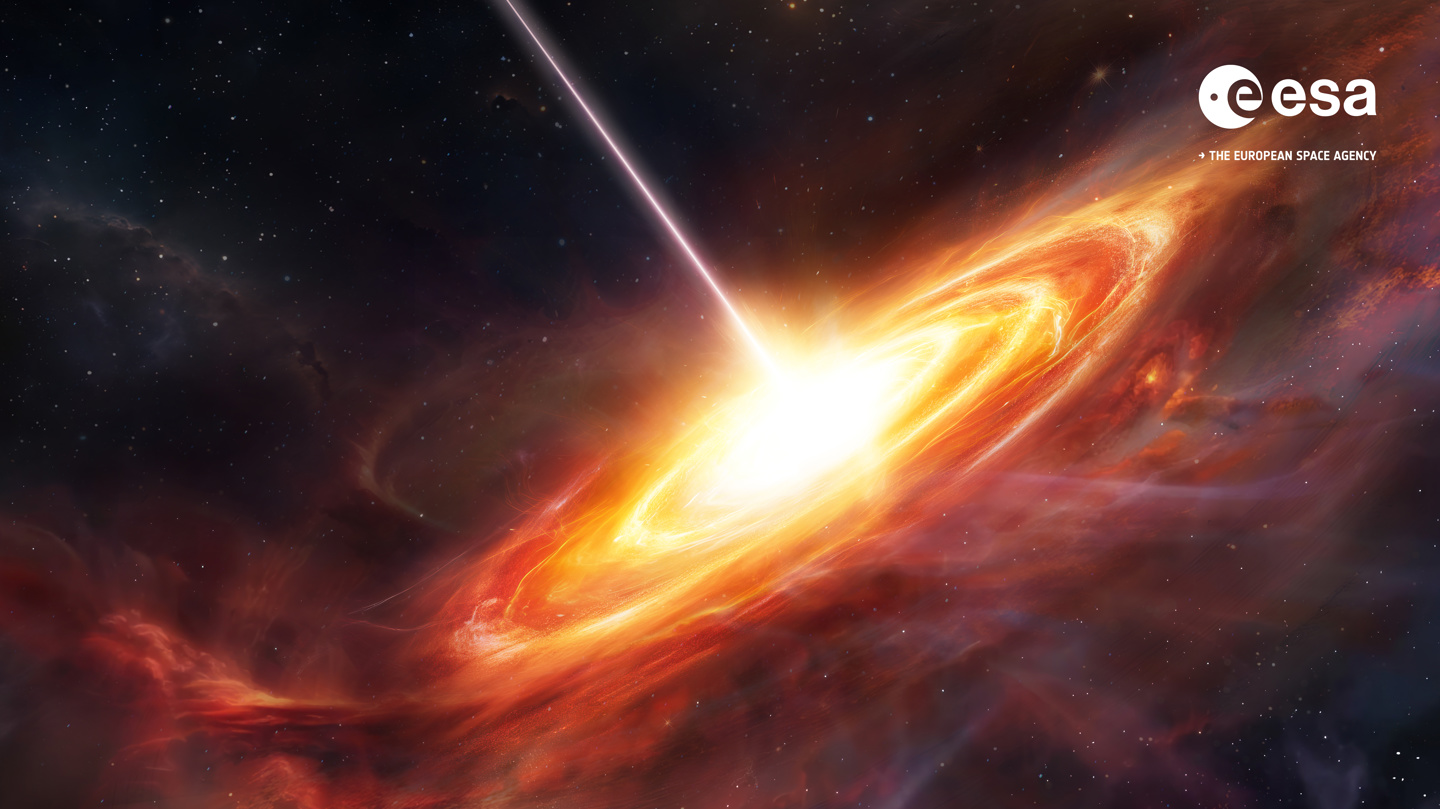
Quasars are a violent, luminous phase in a galaxy’s life. Material spirals into the supermassive black hole at the galaxy’s center, heating up and releasing enormous amounts of energy. The result is a galactic core so bright it outshines everything else in the cosmos.
Finding the earliest examples has been a slow grind. It took astronomers more than a decade to spot roughly ten quasars at a redshift of 7 or higher — meaning their light comes from the first 770 million years of the universe. Euclid has now matched or exceeded that total in just over a year of regular science operations.
Euclid launched in July 2023 and began routine observations on February 14, 2024. The telescope covers wide areas of sky with deep sensitivity and sharp resolution. Its space-based infrared instruments can peer through the expanding universe’s redshift in ways ground-based telescopes cannot. The 31 quasars announced today all came from the Euclid Wide Survey, which will eventually cover more than a third of the entire sky.
Of the 31 quasars found, 12 have a redshift of 7 or higher. The two oldest — cataloged as EUCL J172902.75+641018.1 and EUCL J125308.55+705432.3 — sit at redshifts 7.77 and 7.69 respectively. They surpass the previous record-holder, a quasar at redshift 7.64 discovered in 2021. In total, 14 of the quasars have a redshift of 7 or above, meaning their light comes from when the universe was 750 million years old or younger.
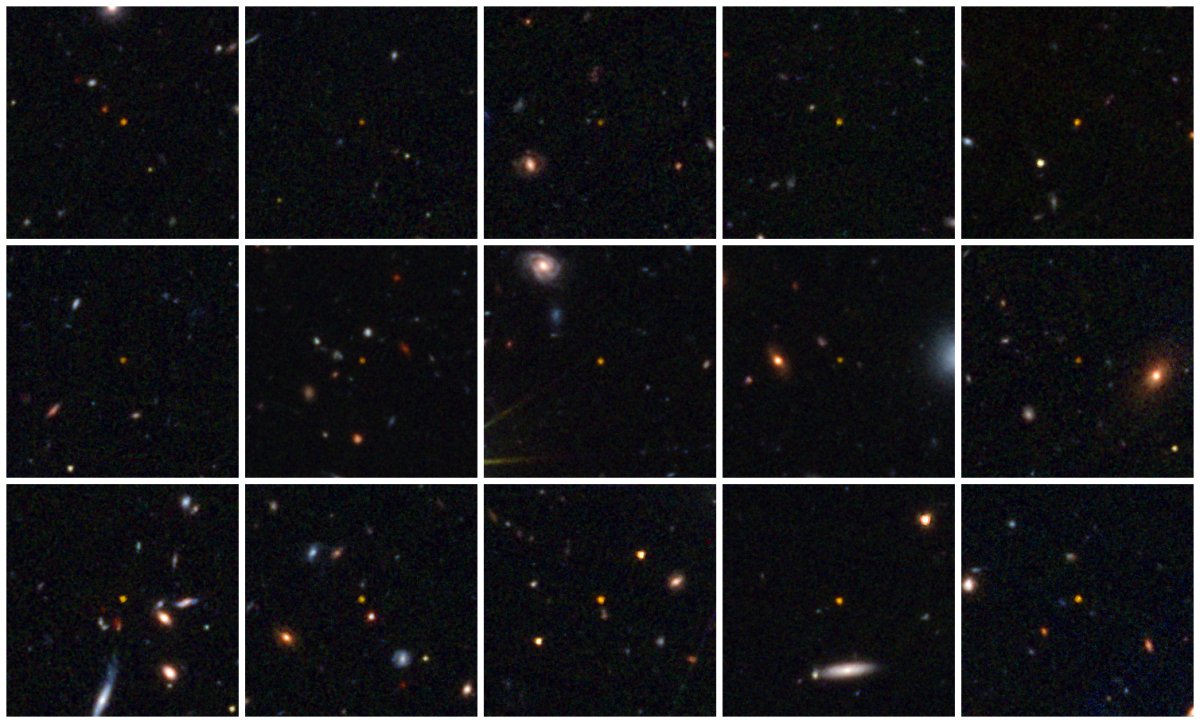
“Before Euclid, we could only detect the very brightest of these ancient quasars,” said Daming Yang of Leiden University, the paper’s first author. The telescope’s ability to efficiently scan large areas while picking up fainter light changed that calculation. The findings were published in Astronomy & Astrophysics on July 6, 2026.
Antonio La Marca, a researcher on the ESA Euclid team, said the discovery more than doubles the known population of quasars at this extreme age.
The second-oldest quasar in the batch has already been studied in detail by Silvia Belladitta and collaborators. Their observations show it is embedded in a galaxy packed with dust and gas, churning out new stars at a furious rate — offering clues about how the first supermassive black holes interacted with their host galaxies.
These ancient quasars date from the Epoch of Reionisation, a critical phase in cosmic history when the universe transitioned from a cold, dark state into the hot, ionized environment that eventually allowed galaxies to form.
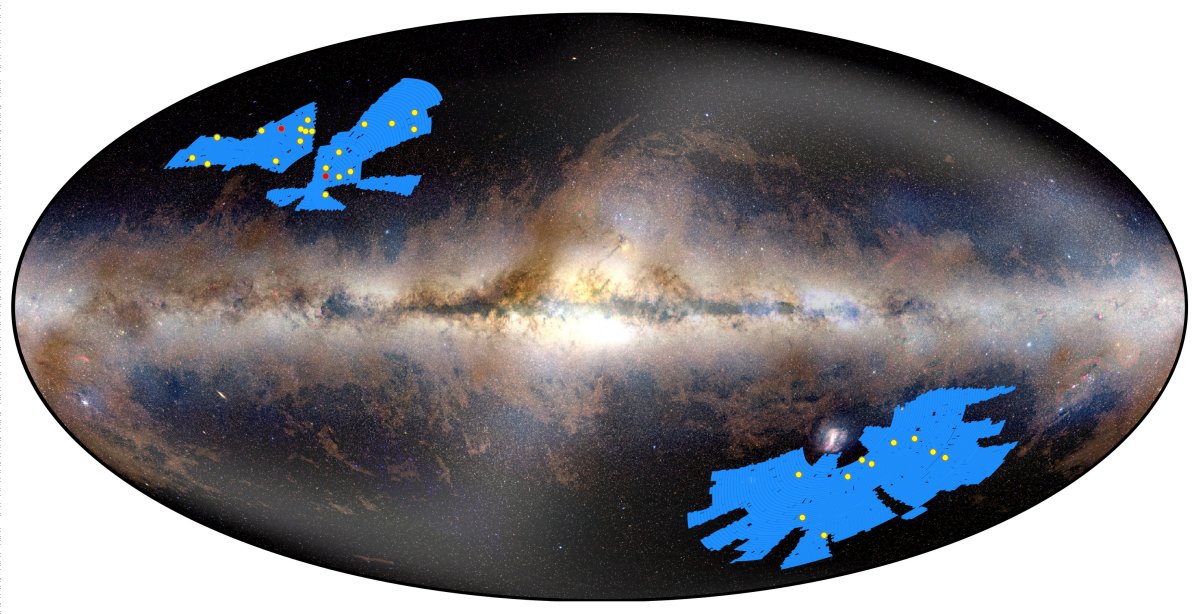
ESA said Euclid will continue surveying billions of galaxies to study the universe’s composition and history along with its large-scale structure, uncovering more distant quasars and the secrets of the dark universe along the way.
The team plans to push further, hunting for quasars at a redshift above 8 — corresponding to just 630 million years after the Big Bang. They will follow up with the James Webb Space Telescope and the Atacama Large Millimeter/submillimeter Array to study these objects and their host galaxies in detail.