Fudan's quantum flash stores one bit using a single electron at room temperature
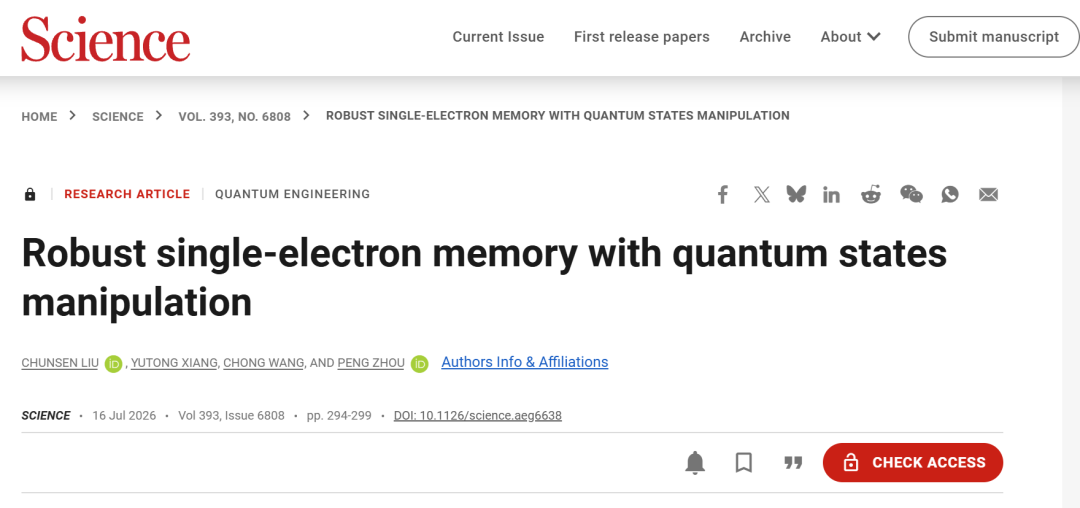
A team at Fudan University has built a memory cell that stores data using a single electron. It works at room temperature. The paper is in Science.
The device, called Quantum Flash, uses a single electron as a one-bit storage unit — the smallest physical carrier of information possible, since electrons are indivisible. Researchers at Fudan’s State Key Laboratory of Integrated Chips and Systems published their results Thursday.
Single-electron storage has been pursued for decades. A 1997 Science paper demonstrated a silicon-based version with a 55 mV storage window that held data for about five seconds. It worked, but not in any practical sense.
The Fudan device delivers a 0.5-volt window, nearly ten times larger. And the data persists even when the power is off.
The key is geometry. The team used atomically thin two-dimensional semiconductors as a natural confinement layer, building a coplanar drain-channel-source structure called Gui-yi (归一, “return to one”). It’s a self-aligned design that isolates and controls a single electron’s quantum behavior reliably at room temperature, something no one had achieved before.
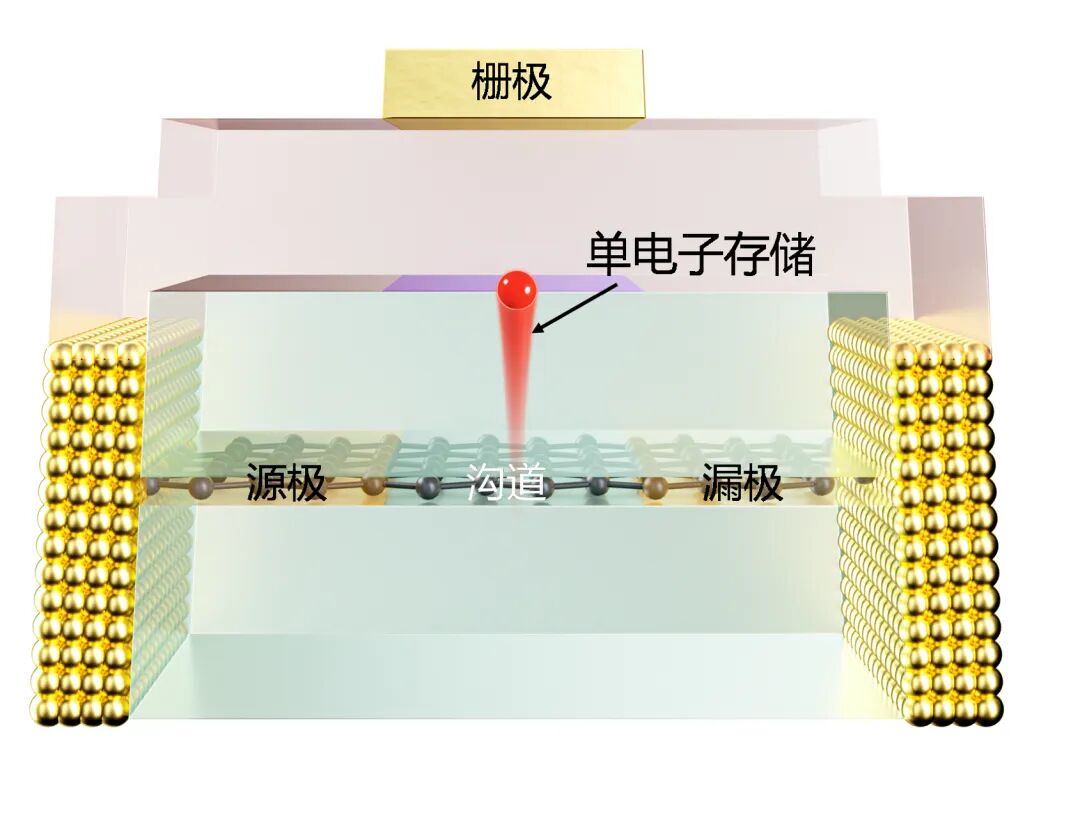
For density, this is near the limit of what physics allows. Today’s NAND flash packs multiple bits per cell, but you can only store so many electrons in a floating gate. Quantum Flash maps one electron to one bit, the theoretical maximum. For AI workloads that need large on-device memory — running language models locally, or building assistants with persistent context — density is increasingly the bottleneck.
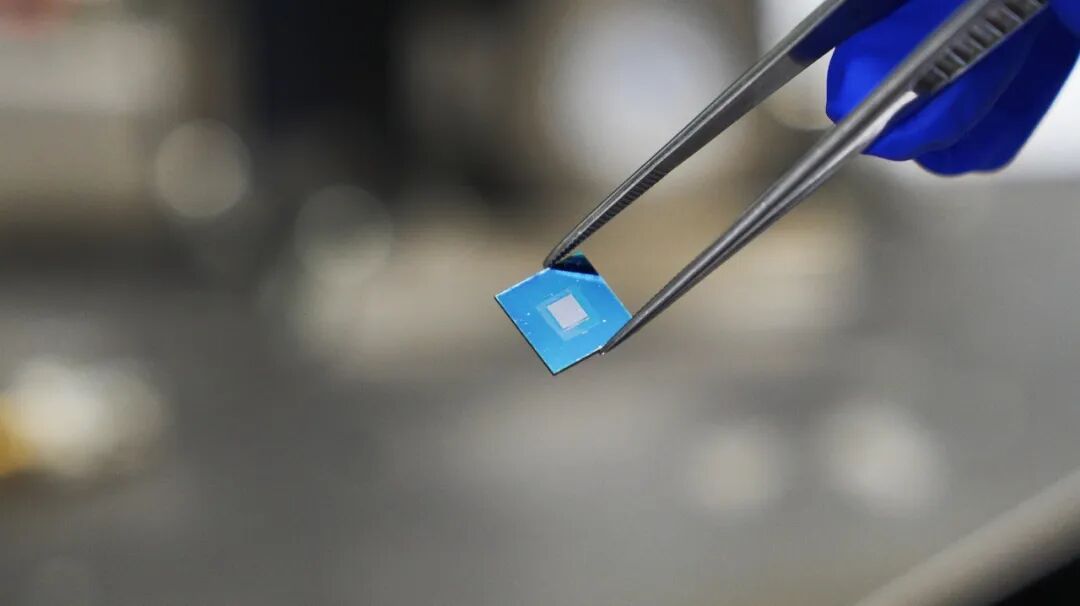
Fudan has three parallel projects: Po-xiao (破晓, “dawn”) targets access speed, Gui-yi tackles density, and Chang-ying (长缨) addresses CMOS compatibility. A prototype chip has already been validated on standard silicon foundry lines.
The group plans to spin out a company within one to three years, targeting AI hardware customers. They say the heterogeneous integration process for 2D semiconductors is simpler than bulk silicon doping and isolation, potentially reaching cost parity with existing memory.
The paper is published at Science, DOI 10.1126/science.aeg6638.