One-Line GCC Patch Delivers 12% Performance Boost for Modern Intel and AMD Processors
A single-line change to the GNU Compiler Collection (GCC) has been found to deliver double-digit performance improvements across modern Intel and AMD processors, a discovery that could quietly accelerate millions of Linux applications without requiring a single code change from developers.
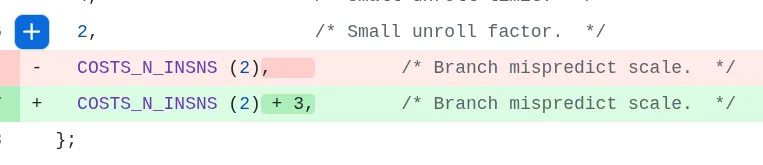
Intel software engineer Lili Cui identified that adjusting one parameter in GCC’s generic x86 tuning code — the branch misprediction cost — produces measurable speedups on contemporary hardware. The patch, which was merged into the GCC Git mainline on Tuesday, triples the estimated cost of a branch misprediction from COSTS_N_INSNS(2) to COSTS_N_INSNS(2) + 3.
The rationale is straightforward. Modern CPUs feature significantly deeper instruction pipelines than their predecessors, which means the penalty for mispredicting a branch — flushing the pipeline and restarting execution — is far more expensive today than it was when the original value was chosen. By raising this parameter, GCC becomes more aggressive about avoiding code patterns that could lead to branch mispredictions, generating binaries that are better tuned for the realities of today’s silicon.
The performance impact is substantial. In SPEC CPU 2017’s 544.nab_r benchmark, the change alone improved scores by 12.7% on Intel Granite Rapids (Xeon 6) processors and by 12.1% on AMD Zen 5 architecture chips. AMD also independently verified the results during the patch review process, lending weight to the finding.
Critically, this improvement applies to software compiled with GCC’s generic x86 tuning target — the default for the vast majority of Linux packages and applications that are not explicitly optimized for a specific microarchitecture via flags like -march=native. That means countless applications deployed on servers running Intel Xeon or AMD EPYC processors, as well as those on desktop and laptop systems powered by Core Ultra or Ryzen chips, stand to benefit automatically once they are rebuilt with the updated compiler.
The patch is expected to ship as part of GCC 17, currently slated for release in 2027. Given GCC’s dominant position as the default compiler in the Linux ecosystem, the change represents one of those rare moments where a small, targeted adjustment to infrastructure software yields a broad, cost-free performance tailwind for the entire platform.