Micron Is Spending $10 Billion on a Hiroshima Factory to Make AI Chips for Nvidia
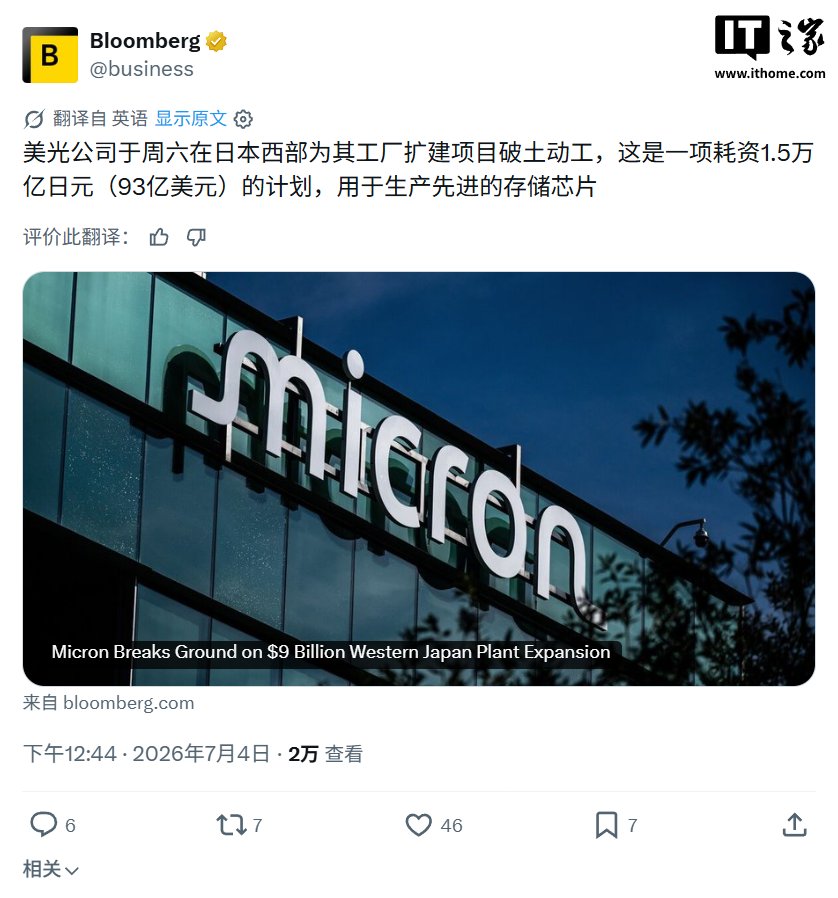
Japan’s semiconductor revival just got a $10 billion turbocharge. Micron announced Friday it will invest ¥1.5 trillion (about $10 billion) to expand its DRAM factory in Hiroshima, with the extra capacity dedicated to the high-bandwidth memory chips that keep Nvidia’s AI accelerators fed.
Japan’s Ministry of Economy, Trade and Industry (METI) is chipping in up to ¥500 billion ($3.3 billion) in subsidies for the project, according to public filings. Construction is already underway, and Micron expects the expanded facility to start producing in 2028.
The expansion is all about HBM — high-bandwidth memory, the specialized DRAM stacked vertically alongside AI processors. Without it, even Nvidia’s most powerful GPUs stall out waiting for data. HBM is what made SK Hynix and Micron essential players in the AI hardware boom, and demand is still running well ahead of supply.
At the groundbreaking ceremony, Micron CEO Sanjay Mehrotra pointed directly to Hiroshima’s role in the company’s AI memory strategy.
“Micron’s first HBM production wafer for AI core storage technology was made in Hiroshima,” he said. “When America’s ambition meets Japan’s craftsmanship, you don’t get a compromise — you get a world-class product.”
The Hiroshima factory isn’t an isolated bet. A wave of semiconductor companies are setting up shop in Japan, backed by government subsidies modeled on the CHIPS Act. TSMC opened a fab in Kumamoto last year. Rapidus, Japan’s homegrown chip venture, is building a 2nm plant in Hokkaido. For Micron, Hiroshima offers something those greenfield projects don’t — an existing facility, a trained workforce, and a supply chain that’s already running.
Japan dominated global chipmaking in the 1980s, then watched South Korea and Taiwan pull ahead. These investments, and the government money fueling them, signal Tokyo isn’t content to stay on the sidelines. For Nvidia and everyone else waiting on more HBM capacity, Hiroshima’s 2028 timeline can’t come soon enough.