Jensen Huang flew to Tokyo to thank the man who saved NVIDIA 30 years ago
Jensen Huang stood in an Akihabara arcade this week, facing the man who once wrote a check that kept his company from going under.
Thirty years ago, Shoichiro Irimajiri — then president of Sega — invested $5 million in a struggling startup called NVIDIA. The company had just failed to deliver on a crucial contract for Sega’s Dreamcast console, and its cash was running out. This week, Huang traveled to Tokyo to personally thank him, the two men sharing the stage at the original Sega Akihabara game center (now GiGO Akihabara Store 3).
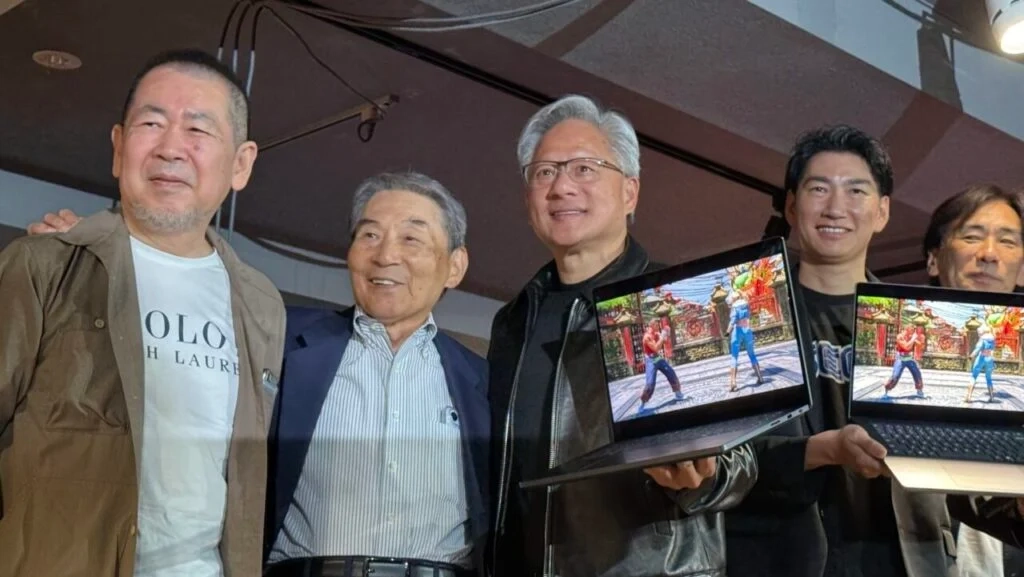
The reunion came with a business announcement. Sega and NVIDIA jointly revealed that Virtua Fighter Crossroads and future Sega titles will support NVIDIA’s RTX Spark — a new all-in-one system-on-chip for thin Windows laptops and compact desktops. Present at the event alongside Irimajiri were current Sega CEO Hajime Satomi, COO Shuji Utsumi, and Virtua Fighter creator Yu Suzuki.
The real weight of the gathering, though, was historical.
In the mid-1990s, NVIDIA had signed a lucrative deal to supply 3D graphics for Sega’s upcoming Dreamcast console. Its first chip, the NV1, had powered the original Virtua Fighter on PC. But the company bet on the wrong technical approach — quadrilateral rendering instead of the triangle-based graphics that became the industry standard — and couldn’t deliver. NVIDIA was burning cash with no clear path forward.
That’s when Irimajiri stepped in. Despite NVIDIA’s failure on the Dreamcast contract, he saw something in the young company.
“$5 million was not a small amount for Sega at the time,” Huang recalled last year. “I told him honestly that if he gave us the money, there was a very high probability he would lose it all. But if we didn’t get it, we’d have to shut down — no way back. He thought about it for a few days, then came back and said: ‘We’re in.’”
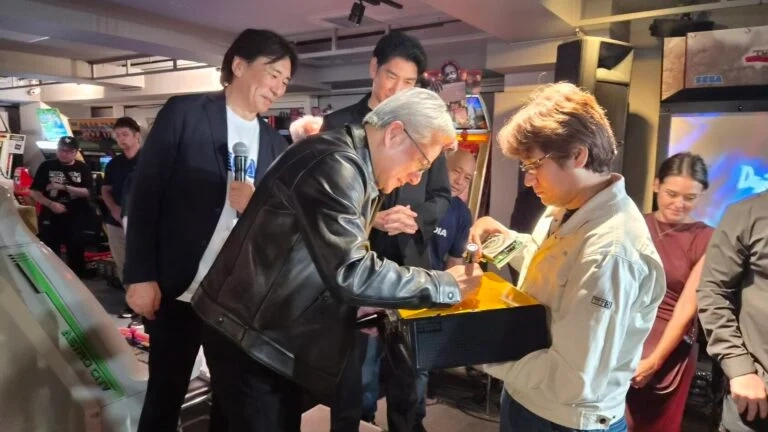
NVIDIA is now worth $4.74 trillion — the most valuable company on the planet. Had Sega held onto that $5 million stake, Huang noted, it would be worth close to a trillion dollars today. Instead, Sega sold its shares for $300 million after the IPO.
“For them, making that much was already a miracle,” Huang said.
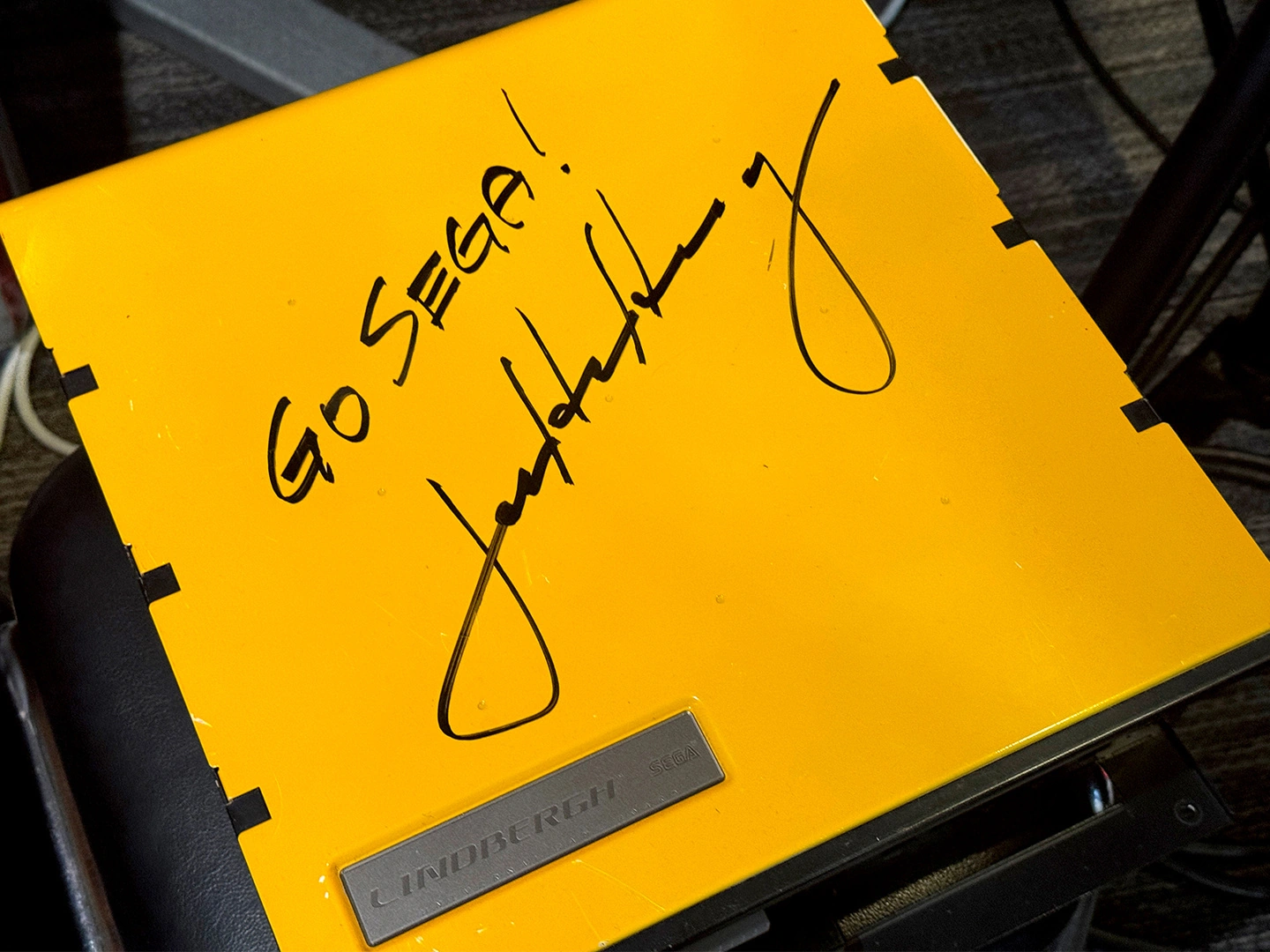
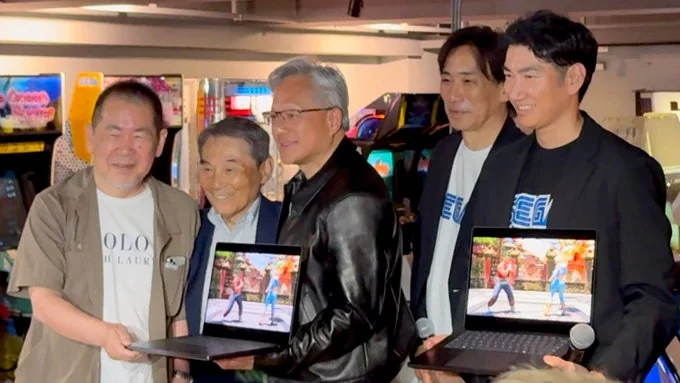
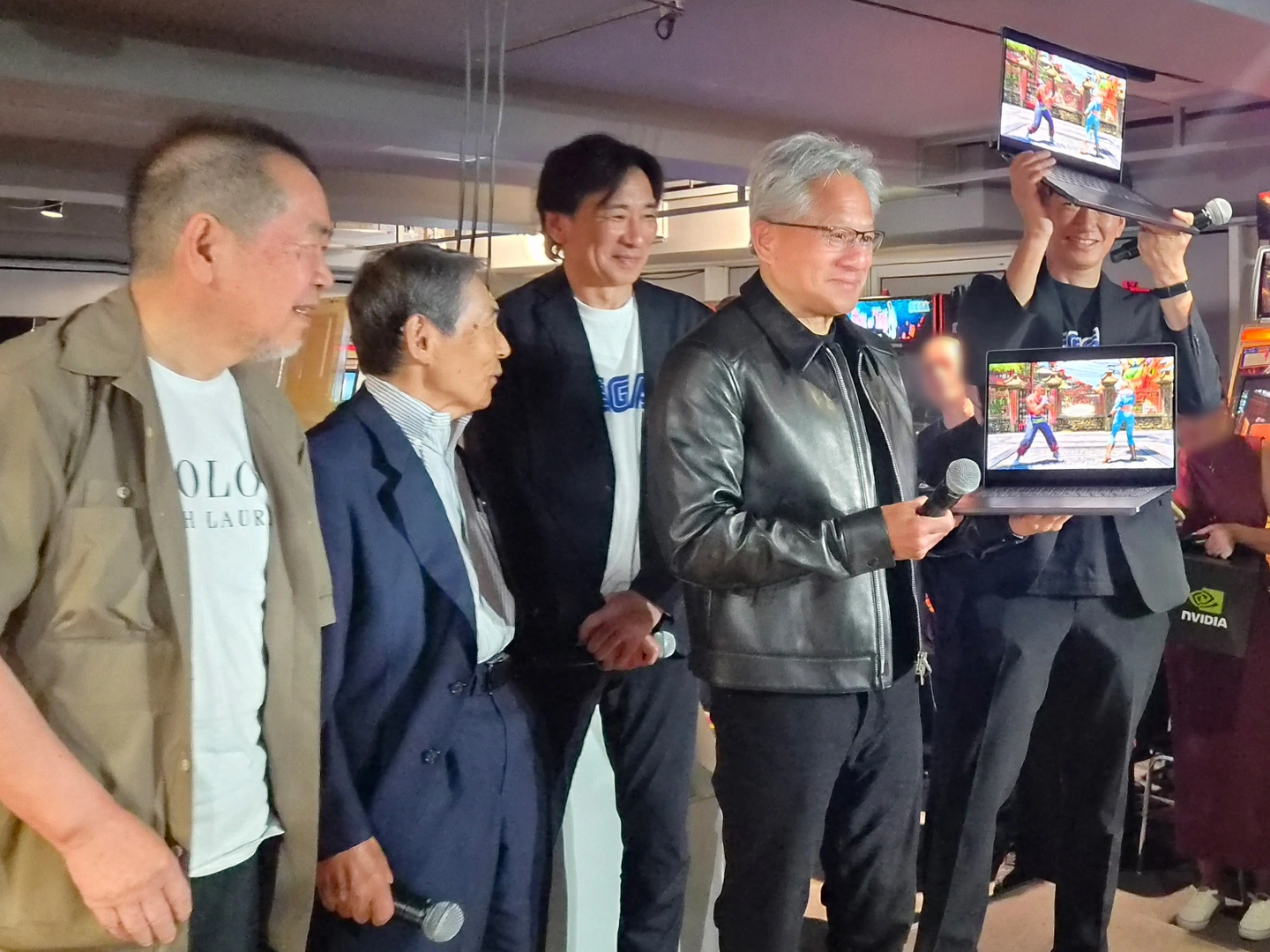
The gathering had the feel of a family reunion — one with a 30-year arc that begins with a near-death experience and ends at the top of the industry. For Huang, standing in that Akihabara arcade with the man who bet on his struggling startup when no one else would, it was a chance to say what he’d been saying in interviews for years directly to Irimajiri’s face: thank you.