OpenAI's UK "Stargate" project was a PR stunt, investigation reveals
There’s a familiar rhythm to big AI infrastructure announcements — the press conference, the handshake photo, the round number in billions. But sometimes the script falls apart. The UK’s so-called Stargate project, touted as OpenAI’s flagship British data center and a cornerstone of US-UK tech cooperation, was shelved in April. OpenAI blamed high energy costs and regulatory uncertainty. The real story, uncovered by The Guardian, is messier.
IT-NEWS, July 5 — The project was announced last September, timed to coincide with Donald Trump’s visit to London. It was supposed to mirror the American Stargate AI initiative, where OpenAI pledged $500 billion. The UK version was smaller but still ambitious — a data center campus in North Tyneside’s Cobalt Business Park, backed by AI infrastructure firm Nscale and chipmaker Nvidia. The British government designated the park an “AI Growth Zone” and said it would attract £30 billion in investment.
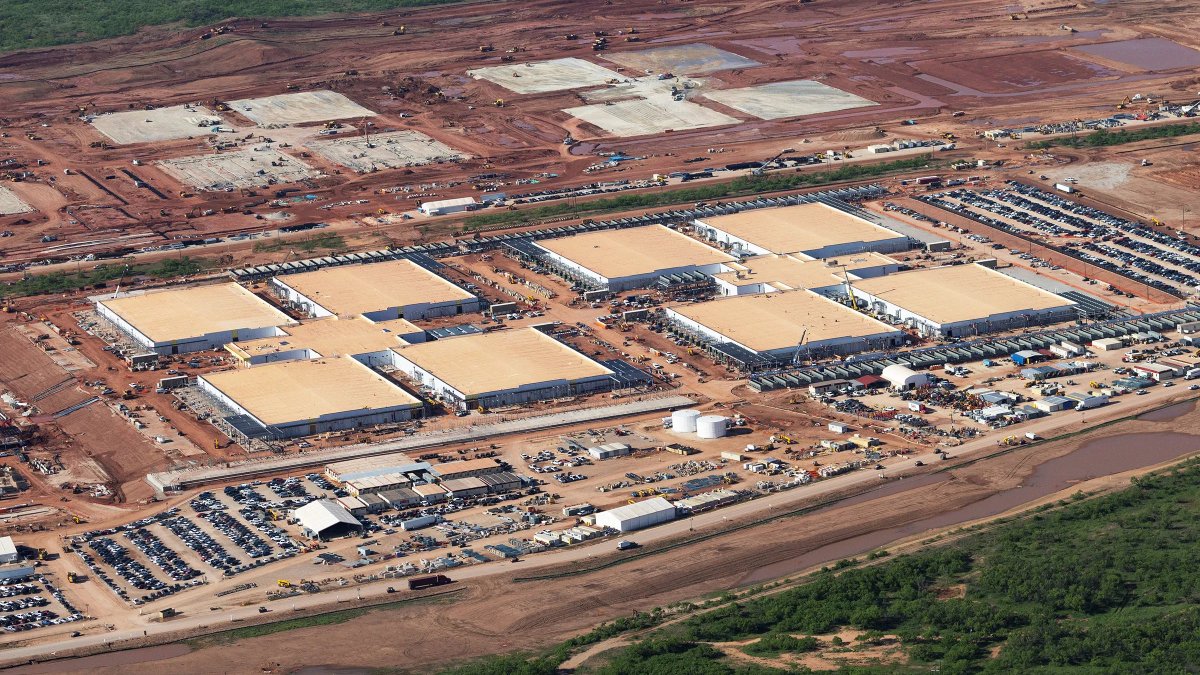
It turns out OpenAI never set foot on the site.
Documents obtained by The Guardian through a Freedom of Information request show that neither OpenAI nor Nscale ever met with local officials in North Tyneside. Only Nvidia sent representatives to the North East Combined Authority, and that happened five months after Trump’s visit — in February 2026, two months before the project was scrapped.
One person familiar with the process described it bluntly: “The government essentially forced Nscale into the Stargate project and the company was completely unprepared. It was never going to happen. It was a PR stunt, and when it fell apart, Sam Altman took the blame.”
The £30 billion figure is itself suspect. The British government’s news release claimed the AI Growth Zone would attract that much investment. But £10 billion of it comes from Blackstone, which is building a separate data center nearby — one that has nothing to do with OpenAI and is still moving forward. The remaining £20 billion was described as “potential investment from future partners.” When The Guardian asked for the methodology behind that number and which future partners were involved, the government refused to provide details.
A corruption watchdog called Corruption Focus pressed the same question. The government’s reply, forwarded to The Guardian, said the £20 billion figure came from what it would cost to build the data center campus with 1.1 gigawatts of power capacity. In other words, the government took the estimated construction cost and repackaged it as incoming investment.
“That is deeply disingenuous and creates unrealistic expectations for local communities,” said Camilla Kingston, a senior campaigner at Corruption Focus.
Local officials were blindsided. John Johnsson, leader of the North Tyneside Conservatives, said his council learned about the Stargate project the same way everyone else did — from the news. “We were all shocked. Nobody had told us anything. One day the announcements came out, big headlines, major project, and we had no knowledge.”
The lack of site visits was just the beginning. FOI requests also revealed that the Cobalt Business Park site is not connected to the national grid. The companies filed an alternative power plan, but the details were redacted from public documents.
“The existing infrastructure here cannot support this kind of computing project,” Johnsson said. “Now, looking back, it seems very unlikely the project would ever have happened here.”
OpenAI’s spokesperson recycled the statement from the shelving announcement when asked about all of this: “We are bullish on the UK’s AI prospects… We continue to evaluate the Stargate UK project and will proceed once conditions, including regulatory and energy costs, support long-term infrastructure investment.”
Nscale said its chief commercial officer did visit North Tyneside, but would not say whether meetings with local officials took place. There is no record of the visit in any official document.
A UK government spokesperson countered that the AI Growth Zone remains on track, with a task force led by the technology secretary and the North East mayor Kim McGuiness working on planning and investment. They said the zone will eventually have 1.1 GW of power capacity, with 400 MW operational by 2028.
Sam Altman once called the Stargate project a “shared vision” for UK AI infrastructure. Jensen Huang described it as a “historic chapter in US-UK tech collaboration.” But historic chapters usually require someone to actually visit the building site.