Samsung SDI Is Betting $150 Billion on Solid-State and Sodium Batteries
There’s a quiet race underway in battery manufacturing, and Samsung’s biggest bet yet just landed. Samsung SDI, the battery-making arm of the Samsung Group, said Friday it will pump 25 trillion won — roughly $18 billion at current exchange rates — into two production sites in South Korea over the next 14 years.
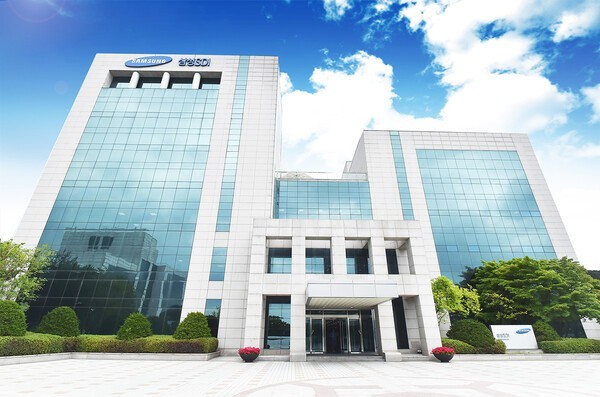
The plan covers Ulsan and Cheonan, two industrial cities that will carry very different loads in Samsung SDI’s long-term strategy. Ulsan gets 16 trillion won to become the company’s next-generation battery hub, with mass-production lines for all-solid-state cells, lithium iron phosphate (LFP) batteries for energy storage systems, and sodium-ion batteries. Cheonan gets 9 trillion won to serve as the global mother factory — a master plant where new cell technologies are validated on pilot production lines before being rolled out across Samsung SDI’s international facilities.
Samsung SDI is targeting mass production of all-solid-state batteries in the second half of next year. The company’s S-Line solid-state pilot line is already running at its research center in Suwon, a 6,500-square-meter facility that has been quietly refining the production process. In Cheonan, a dry electrode pilot line called DryEV is also operational — a technology designed to bypass the cost and complexity of traditional wet electrode manufacturing.
The investment runs through 2040, which is both aggressive and deliberate. Battery factories take years to build and fine-tune, and Samsung SDI is effectively reserving its production capacity for a generation of chemistries that haven’t fully matured yet. Sodium-ion, in particular, is still early in its commercialization curve, but the company is betting it will matter for grid-scale storage where cobalt and lithium supply chains are too expensive or too constrained.
The 25 trillion won announcement came a day after Samsung SDI revealed a separate 9 trillion won commitment to Cheonan. And it sits inside a much larger picture: on June 29, the Samsung Group announced a 2,655 trillion won ($1.17 trillion) ten-year investment roadmap for South Korea. Semiconductors take the largest slice at 2,106 trillion won. Samsung Display plans to invest 67 trillion won in its Asan campus in Chungcheongnam-do.
What makes Samsung SDI’s play stand out is the breadth of chemistries. Most battery makers specialize — some in solid-state, others in LFP, a few in sodium-ion. Samsung SDI is building production lines for all three, plus maintaining the dry electrode program, all within the same 14-year window. That’s a bet that the battery market will fragment rather than converge, and that whoever can manufacture multiple chemistries at scale will own the middle of the market.