Sony's fine print says your PlayStation account can be deleted after three years of inactivity — taking your games with it
Sony’s decision to stop producing physical PlayStation discs by early 2028 has already angered collectors and preservationists. But it also pushed players to actually read the company’s terms of service — something most of them probably should have done a long time ago.
Buried in those terms is a clause that lets Sony terminate any PlayStation Network account that goes unused for 36 months. And when an account gets terminated, every digital game tied to it (purchased across years, maybe thousands of dollars worth) goes with it.
Blogger Astal posted the relevant section on social media: Section 21.2 of Sony Interactive Entertainment’s terms of service. It says that after three years of inactivity, the company “reserves the right to cancel the account.” Sony promises to send an email warning first, giving users six months to log in or formally request the account stay open.
The rule has been in place for years, and it applies to European users. Nobody seemed to mind until the broader disc controversy forced a closer look at what digital ownership on PlayStation actually means.
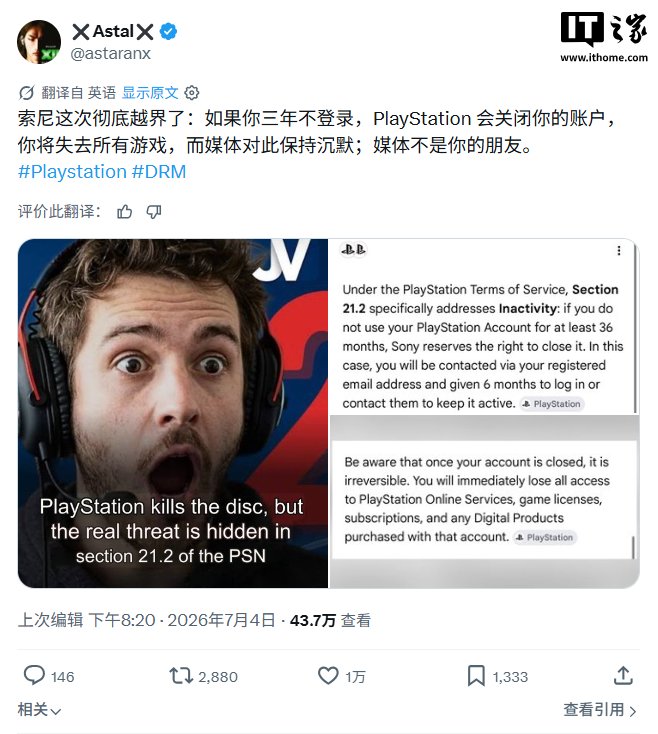
For the physical-disc crowd, this feels like the point they’ve been trying to make all along. A game on a shelf can’t be remotely revoked. A PlayStation account can. Even if Sony has never actually enforced this rule — there are no public cases of it happening. But the fact that the language exists in the terms is enough to spook a lot of people.
The counterargument is straightforward enough: most players don’t go three years without touching their PSN account. But edge cases exist. Someone might spend a console generation on Xbox or Nintendo. Military deployment keeps people away from their home setup for years at a time. Life happens, and digital libraries hang on habits that don’t always survive it.
IT-NEWS has learned that Sony isn’t alone here. Microsoft’s Xbox terms also allow for deletion of inactive accounts, with a catch: as long as you have purchase history or an active subscription, Microsoft typically leaves the account alone. That small difference matters — it means your library is tied to the money you’ve spent, not the frequency of your logins.
The broader question the gaming industry still hasn’t answered is what “owning” a digital game actually means. The disc business is winding down, and the fine print says the answer might be: not as much as you thought.