Huawei plans 60 million smartphones in 2026, defying a market that's bleeding
Huawei is quietly swimming against a brutal current. While much of the smartphone industry cuts orders and braces for one of its worst years, the Shenzhen company has told suppliers it plans to ship more than 60 million phones in 2026 — a 20% increase over last year’s output.
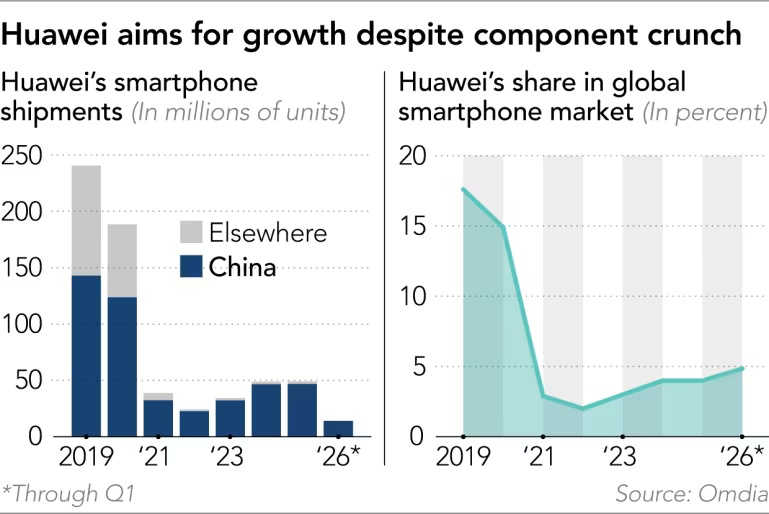
Nikkei Asia reported the news Tuesday, citing supply chain sources familiar with the matter. Huawei shipped fewer than 50 million smartphones in 2025, but is targeting roughly 60 million this year as memory chip prices continue to climb.
The contrast with its Chinese rivals is stark. Xiaomi, OPPO, and vivo have all repeatedly cut their production forecasts as DRAM and NAND prices surge and electronic component costs rise. An executive at a peripheral chip supplier told Nikkei that Huawei is the only Chinese customer whose monthly orders this year show sustained growth. A PC maker executive said his company tried to secure more DRAM from Chinese memory manufacturers, only to be told that capacity has already been reserved for Huawei.
The data backs up the divergence. IDC reports that China’s smartphone market shrank 4.3% year-over-year in the second quarter of 2026 to about 66 million units, marking five consecutive quarters of decline. But Huawei and Apple both grew roughly 20% in the period. Huawei now holds 23% of the Chinese market, making it the country’s largest smartphone brand.
Globally, the picture is grimmer. Omdia forecasts that worldwide smartphone shipments will fall 12.2% in 2026 to 1.093 billion units. IDC counted 277.5 million units shipped in Q2 2026, down 6.7% from a year ago. Counterpoint Research is even more bearish, predicting a 14% decline for the full year.
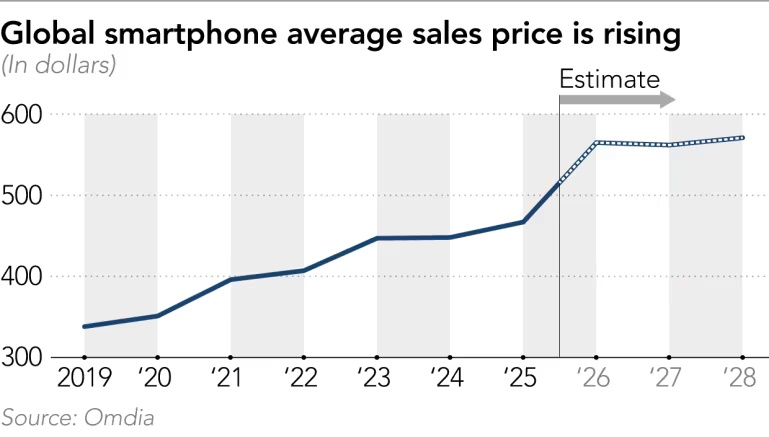
Memory prices are the root cause. DRAM and NAND flash costs have risen up to 200% year-over-year, pushing average smartphone prices from $467 in 2025 to an estimated $565 in 2026, according to Counterpoint. That math crushes low-end margins and benefits brands that can command premium pricing, which is exactly where Huawei and Apple sit.
Huawei’s comeback is still heavily China-dependent. The company’s global market share has crept from about 4% in 2025 to nearly 5% in the first quarter of 2026, according to Omdia. Analyst Runar Bjoerhovde noted that Huawei has maintained growth primarily through competitive pricing in its home market, and that second-quarter numbers will likely confirm the trend.
Huawei shipped fewer than 50 million phones in 2025. The company expects 60 million in 2026. Whether it can push past that while the rest of the industry fights for air is the story worth watching.