India's first private orbital rocket reaches space — Skyroot Aerospace puts Vikram-1 in orbit
The 22-meter rocket lifted off from Sriharikota at 14:35 Beijing time, carrying a stack of customer payloads and experimental instruments. Fifteen minutes later, Vikram-1 had inserted them into a 450-kilometer orbit, making India the third country to achieve orbital launch through a private company.
The mission, named “Agaman,” was the first orbital attempt for Skyroot Aerospace, a startup founded in 2018 after India opened its space sector to private players. The company has since attracted backing from international investors and reached a $1 billion valuation earlier this year — India’s first space unicorn.
Vikram-1 uses a three-stage solid-fuel design with a liquid-fuel orbital adjustment module, powered by a 3D-printed engine. Both the solid-fuel architecture and the printed engine components flew for the first time in an Indian rocket. The vehicle can deliver up to 350 kilograms to low Earth orbit.
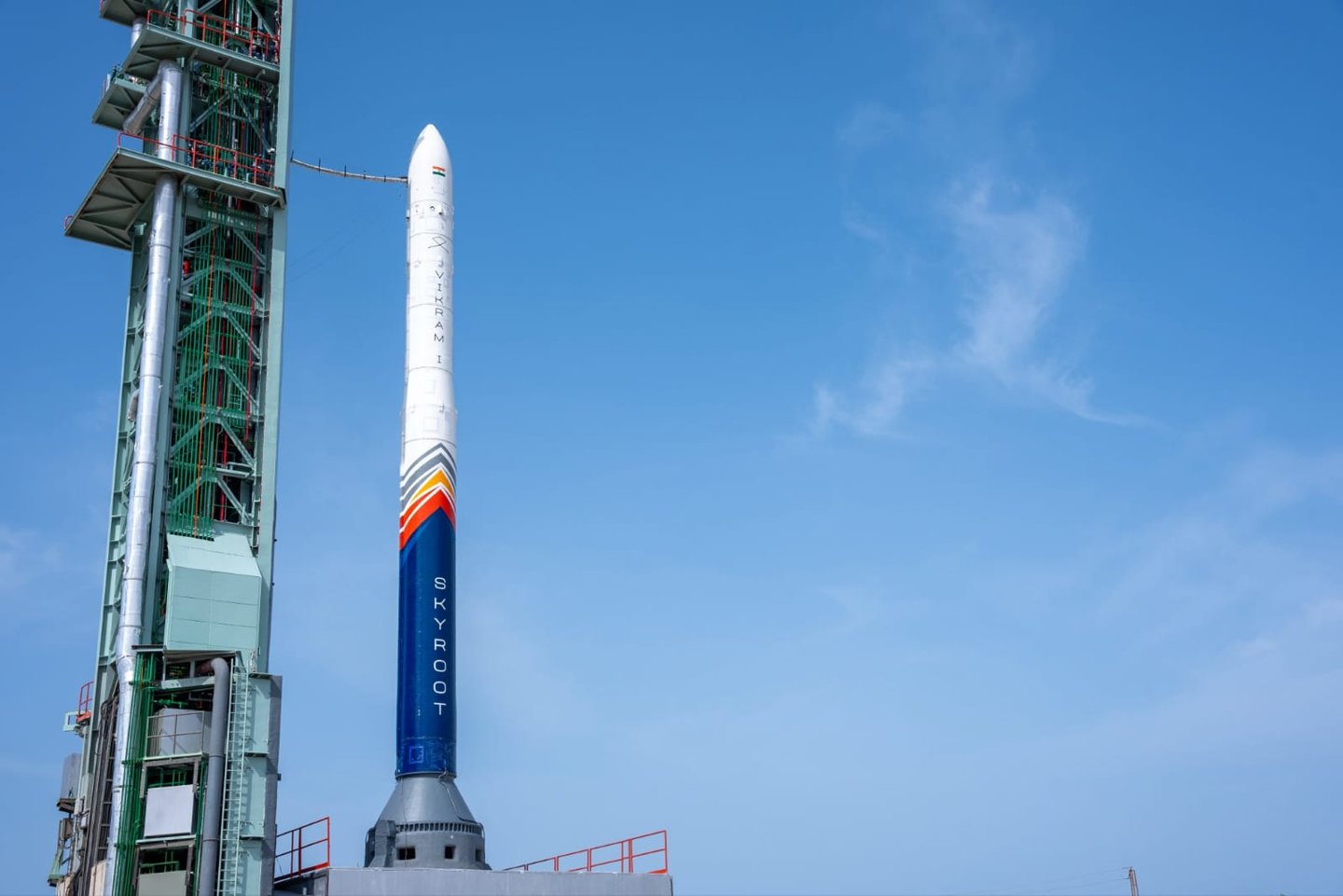
Vikram-1 lifting off from Satish Dhawan Space Centre
The launch tested the rocket’s propulsion, avionics, telemetry, guidance, navigation, and control systems in a single flight. Skyroot said the data will feed into the design of future commercial missions.
India’s space economy is currently valued at around $8 billion. The government has set a target of $44 billion by 2033, betting that private companies like Skyroot can claim a meaningful share of a launch market dominated by American, European, and Chinese players. This launch is the first concrete proof that India’s private sector can put payloads in orbit on its own.
Skyroot was among the first wave of Indian space startups to emerge after the government relaxed its monopoly on space activities. The company has been developing Vikram-1 for several years, with multiple suborbital tests under its belt before attempting the full orbital mission.