How Electronic Warfare Helped China's Liaoning Carrier Shake Off Persistent Tracking
China’s Liaoning aircraft carrier strike group returned from its longest-ever distant-sea training deployment on June 22, completing over 40 days of continuous operations across the South China Sea and Western Pacific. What made this deployment especially notable wasn’t just its duration — it was the unprecedented 20-day gap in Japanese tracking records that has drawn fresh attention to the carrier group’s electronic warfare capabilities.
The Surveillance Gap
Throughout the deployment, Japan’s Ministry of Defense — which has historically published detailed, high-resolution imagery of Chinese naval movements through the region — was conspicuously silent. According to China Central Television (CCTV), the June 1通报 (notification) from the Japanese side contained only a track chart and aircraft launch-and-recovery counts, with zero photographs attached. From that point until the carrier group’s return, no new imagery was released at all.
More striking still, Japanese tracking records ceased entirely on May 29 and did not resume until June 20 — a gap exceeding 20 days with no publicly acknowledged surveillance data. For a defense establishment that has made a routine practice of photographing Chinese warships transiting the Miyako and Bashi Straits, this silence was uncharacteristic.
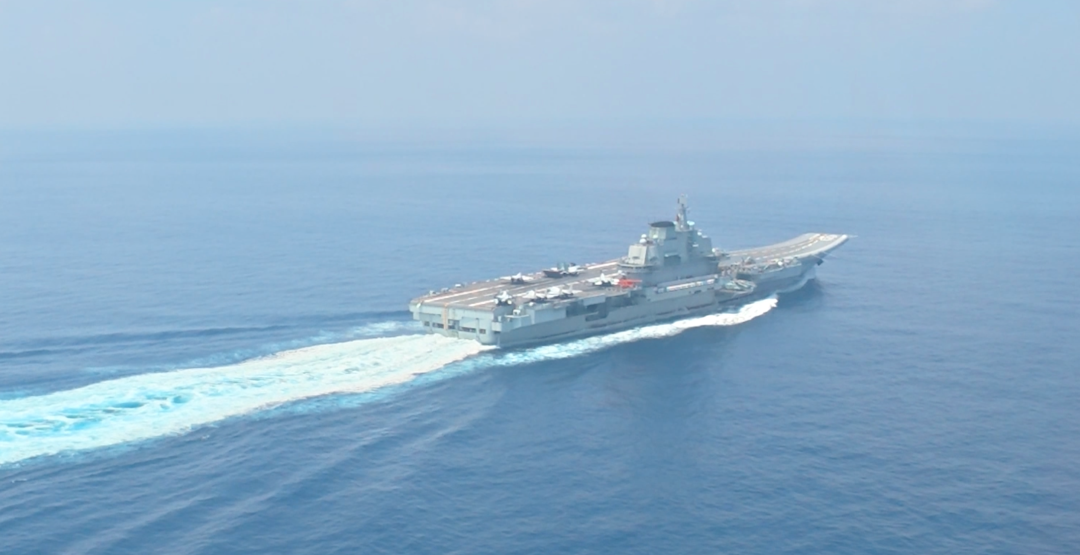
CCTV’s analysis identified three factors that enabled the carrier group to effectively “shake off” persistent tracking.
1. Integrated Fleet Architecture
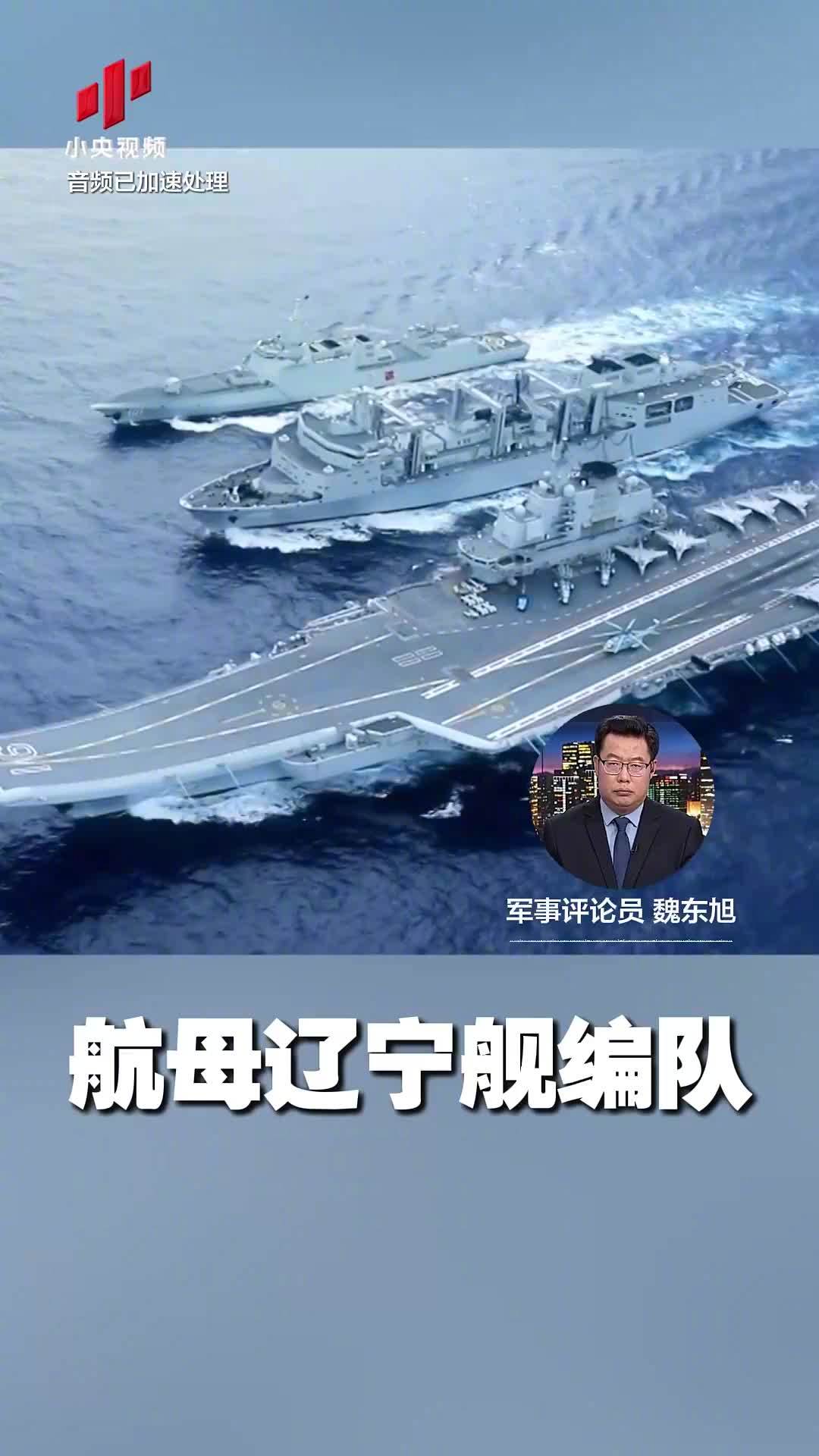
The strike group that departed on this deployment was more complete than any previous Liaoning outing. Beyond the carrier itself, the formation included destroyers, an amphibious assault ship, and a replenishment vessel — forming an integrated combat system capable of coordinated air defense, anti-submarine warfare, anti-surface strikes, and at-sea logistics. This tight-knit operational architecture forced trailing Japanese reconnaissance platforms to maintain greater standoff distances, making close-range photography difficult if not impossible.
2. Electronic Warfare Dominance
The second and most technologically significant factor was the carrier group’s electronic warfare (EW) suite. According to CCTV, Chinese electromagnetic operations created substantial friction across every link in the Japanese ISR chain: radar search, electronic reconnaissance, communications backhaul, and data fusion. By contesting the electromagnetic spectrum, the carrier group degraded Japan’s ability to precisely locate individual vessels, determine aircraft launch-and-recovery rhythms, and coordinate optimal photography angles. The result was a direct compression of the intelligence-gathering window available to tracking platforms.
This represents a meaningful evolution in PLA Navy doctrine. Electronic warfare is no longer treated as a supporting function but as an operational-level capability that shapes the information environment across an entire theater.
3. Beyond the First Island Chain
The third factor was geographic. By pushing into the deep Western Pacific — well beyond the “First Island Chain” where Japan’s surveillance architecture is concentrated around chokepoints like the Miyako and Bashi Straits — the carrier group entered an area where Japanese persistent monitoring has historically been thin. Once in open ocean, the strike group’s operational maneuvering space expanded dramatically, stretching tracking chains beyond their practical limits.
Implications
The deployment marks the Liaoning’s longest distant-sea training mission to date and serves as a validation of the PLA Navy’s evolving blue-water capabilities. CCTV characterized the episode as evidence that China’s carrier strike groups are developing a credible sea-air integrated, system-of-systems approach to distant-sea area denial — one in which electromagnetic spectrum control plays a role equal to kinetic capability.
For regional observers, the surveillance gap is a data point in a broader trend: the PLA Navy is not simply building more ships, but fielding increasingly sophisticated operational enablers — electronic warfare, integrated C4ISR, and long-range logistics — that make carrier formations harder to track, harder to target, and more resilient in contested environments.