Mozilla's 2026 Open Source AI Report: DeepSeek V4 Flash Leads the World With 18.4T Monthly Tokens
Open-source AI models are eating the world — just not in the way everyone expected.
Mozilla published its 2026 State of Open Source AI report on Tuesday, and the numbers tell a story that’s both impressive and complicated. Based on Chatbot Arena data from March 2026, the average performance gap between open-weight and closed-source models now sits at just 3.3%. That’s down from 8.04% in January 2024, and it’s a gap that’s concentrated in specific areas rather than a broad capability divide.
The report tracks how far open models have come in two years. In August 2024, the gap briefly shrank to 0.5% — a near-tie. Then DeepSeek-R1 arrived in February 2025 and open models actually matched the best US-built systems for a moment. By March 2026, the gap widened slightly to 3.3%, but the report argues the headline number is misleading. Open models match or nearly match closed models on coding, instruction following, and general knowledge. The real gap is narrower than it looks: it lives in reasoning, long-context retrieval, and agent tasks — capabilities that matter but don’t define everyday use.
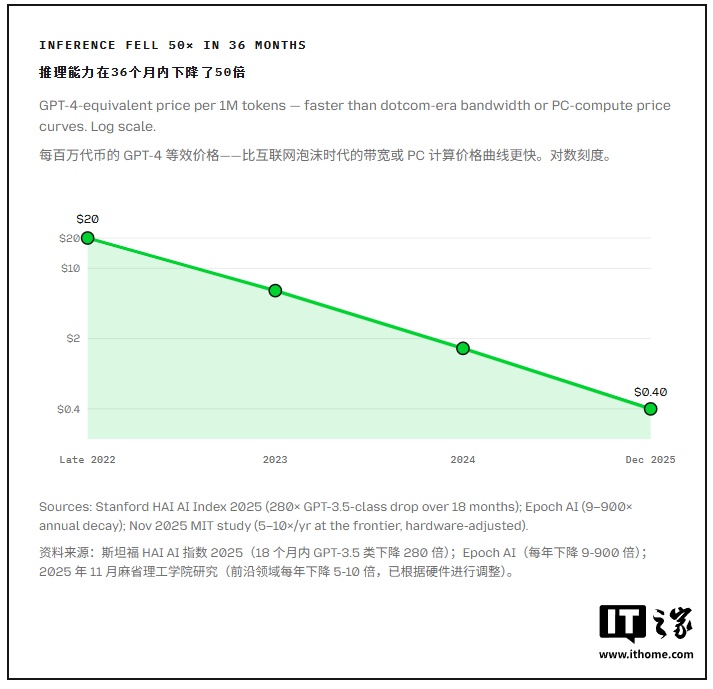
The pricing trajectory is even more striking. GPT-4-class models cost $20 per million tokens at the end of 2022. By December 2025, that number hit $0.40 — a 50x drop in 36 months. That’s a faster price decline than what happened to bandwidth or PC computing during the internet boom.
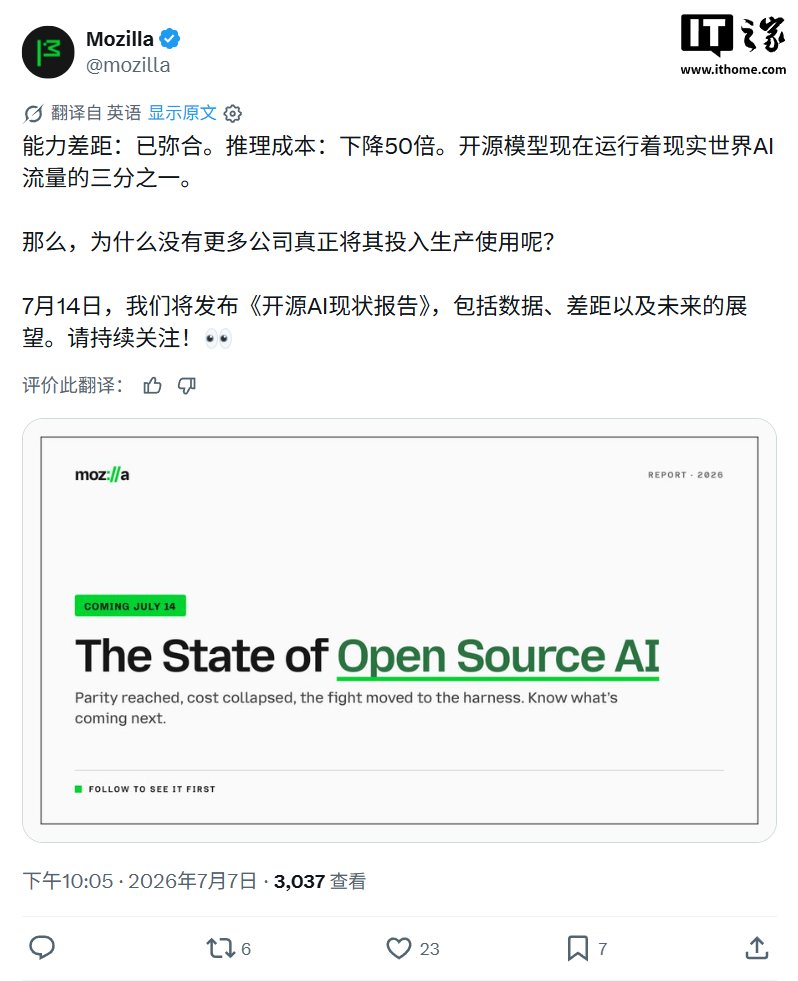
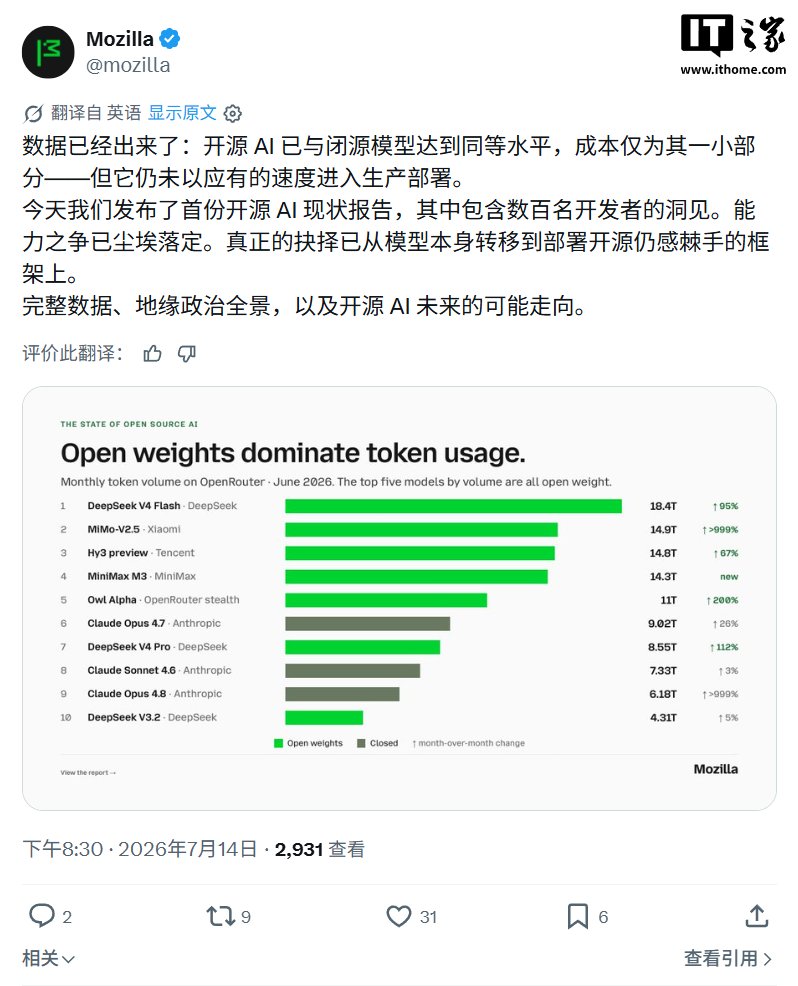
On usage, the data from OpenRouter — the world’s largest AI aggregation platform — shows a clear picture as of June 2026. Every single model in the top five by monthly API token consumption is open-source. DeepSeek V4 Flash leads with 18.4 trillion tokens per month. Xiaomi’s Mimo-V2.5 follows at 14.9 trillion, and Tencent’s Hy3 Preview rounds out the top three with 14.8 trillion.
But adoption and deployment tell two different stories. Mozilla and SlashData surveyed developers in 2026 and found that 79% use open models — the same rate as closed models. Yet only 51% of teams using open models successfully deploy them to production, compared to 63% for closed models. The bottleneck isn’t model quality. It’s operational: performance tuning, integration, and maintenance are harder to get right with open-weight systems.
The report is available at Mozilla’s website for those who want the full breakdown. The short version: open-source AI has won the usage war, but the infrastructure battle is just getting started.