Tesla Is Building Grok Voice Control for Its Self-Driving System
Talking to your car is about to sound a lot less like barking orders at a robot and a lot more like directing a human driver.
Tesla is working on letting its Grok AI chatbot directly control the Full Self-Driving system through natural language. Instead of fumbling with menus or memorizing specific voice commands, drivers would simply tell the car what to do: “pull into the second driveway on the right” or “park away from other cars.”
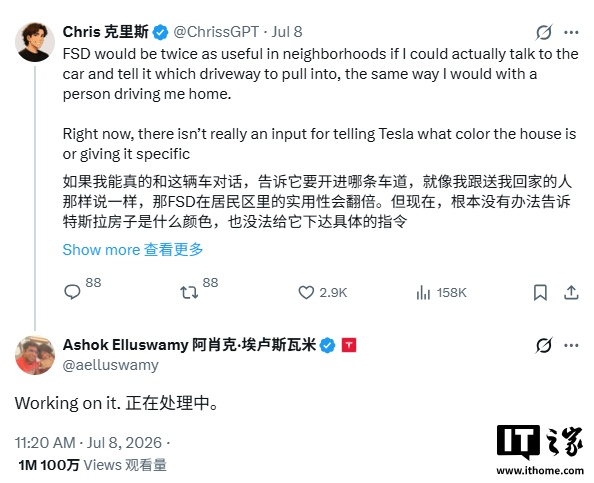
The confirmation came from Ashok Elluswamy, Tesla’s head of AI, who responded to a post on X from tech journalist and Tesla owner @ChrissGPT. The journalist described how much more useful FSD would be in residential neighborhoods if he could just tell it which driveway to enter. Elluswamy’s reply was brief: “Working on it.”
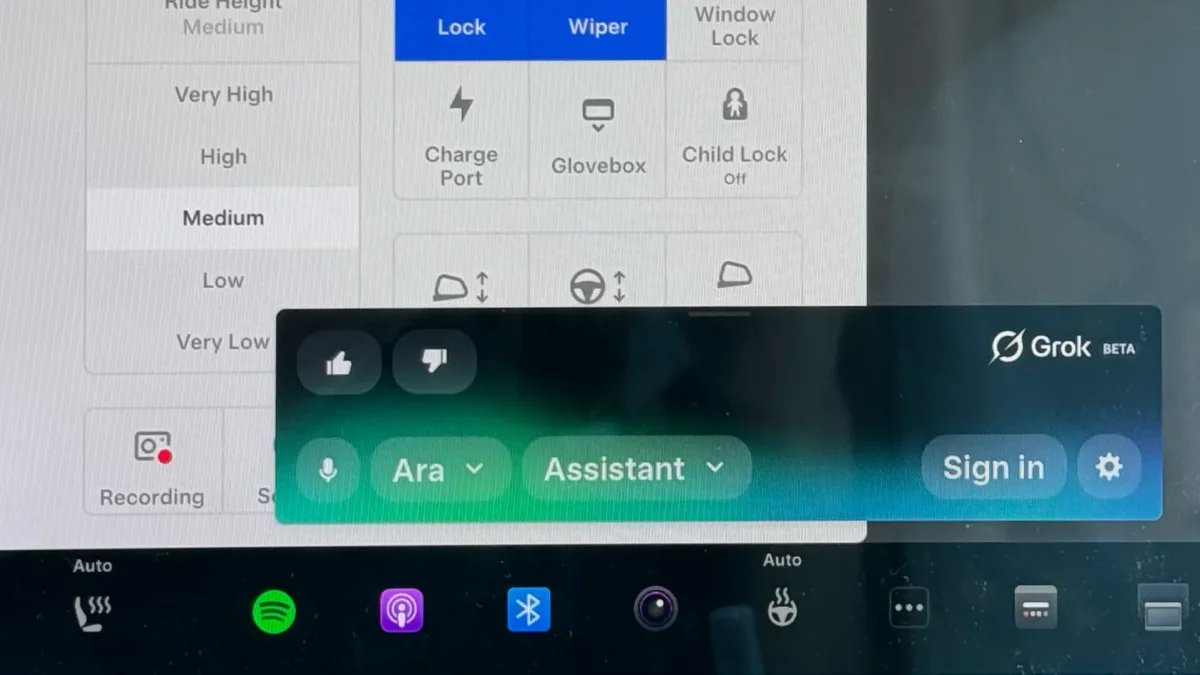
Grok first arrived in Tesla vehicles last summer, giving drivers a conversational AI assistant they could chat with, ask questions, or request news summaries. Since then, Tesla has steadily expanded what Grok can do. The 2026 spring update added location-based reminders: “remind me to grab my gym bag from the trunk when I get home.” Drivers can already use voice to add navigation waypoints or modify routes on the fly.
Tying Grok directly into FSD was the obvious next step. Elon Musk confirmed it was on the roadmap earlier this year, and last month said voice-controlled FSD could ship in “roughly three months.” Tesla time — or “Elon Time,” as fans call it — has a history of slippage. But Elluswamy’s public confirmation suggests the software framework is past the planning stage and into active development.
If Musk’s timeline holds, the feature could arrive as early as fall 2026.
Right now, the only way to influence FSD’s behavior at an intersection is by turning on the turn signal early, a workaround that feels more like a hack than a conversation. Grok integration would change that entirely. A driver could say “turn left at the stop sign instead of going straight” or “navigate to Costco and park somewhere far from other cars,” and the system would handle the rest.
The feature could solve one of FSD’s most persistent weak points: the final approach. Tesla’s FSD v14.1 already includes “Parking at Destination,” but the experience is still clunky. The car sometimes struggles to stop at the right entrance or picks awkward spots for drop-offs. Natural language commands like “stop at the second house on the left” would make the last 50 feet of any trip as smooth as the freeway stretch.
Musk has also hinted that future versions of FSD will learn individual parking preferences, like where you like to stop at home or the office and how you prefer to orient the car. That kind of personalization could become critical for Tesla’s planned Robotaxi service, where passengers will want to add stops, change destinations, or specify exactly where to be dropped off without touching a screen.
Beyond driving, Grok’s growing role inside the car opens the door to broader cabin controls. Rolling down windows, switching on Pet Mode, or adjusting the climate could eventually be handled the same way: just say what you want.
For now, no official release date has been set. But the AI team is building it, and the software framework is already in active validation.